


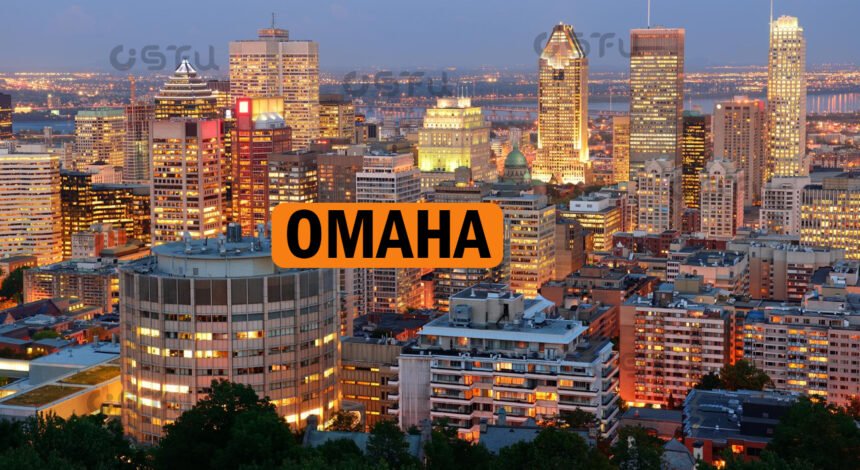
Omaha, Nebraska sits on the west bank of the Missouri River as the state’s largest city and the county seat of Douglas County. Founded in 1854 and incorporated in 1857, Omaha grew from a river crossing into a major transportation, agribusiness, and financial hub. The city’s population stands near 485,000 within city limits, with the greater Omaha-Council Bluffs metro area exceeding one million residents. This guide covers Omaha’s origins, economic base, and the cultural life that shapes it today.
What Is Omaha Known For?
Omaha is best known as the headquarters of Berkshire Hathaway, the investment company led by Warren Buffett, and as a historic hub for railroads and meatpacking. The city earned the nickname “Gateway to the West” because of its role as the eastern terminus of the first transcontinental railroad, designated by President Abraham Lincoln in 1863.
Beyond finance and rail, Omaha is recognized for the Henry Doorly Zoo and Aquarium, ranked among the top zoos in the country, and for its strong ties to insurance, healthcare, and agribusiness. The city also hosts the College World Series each June, drawing college baseball fans from across the nation to TD Ameritrade Park.
How Did Omaha Get Its Name and Start?
Omaha takes its name from the Omaha Indian word meaning “upstream people,” reflecting the Omaha Tribe’s presence along the Missouri River long before European settlement. The city was founded on July 4, 1854, during the opening of the Nebraska Territory, initially functioning as a ferry crossing point opposite Council Bluffs, Iowa.
Early Omaha served as a supply center for wagon trains heading to Denver and other western destinations. Its position at the eastern end of the transcontinental railroad, completed in 1869, cemented its role as a critical link between the eastern United States and the expanding West.
What Is Omaha’s Economy Built On?
Omaha’s economy centers on financial services, agribusiness, transportation, and healthcare. Berkshire Hathaway anchors the financial sector, while Union Pacific Railroad, headquartered in Omaha, continues the city’s long history as a freight and logistics center.
The city’s economic roots trace back to livestock and meatpacking. From the 1890s through the mid-20th century, Omaha ranked among the top livestock markets in the world, a legacy that shaped its stockyards district and working-class neighborhoods. Today the metro area’s annual economic output exceeds $50 billion, supported by a diversified base that includes insurance carriers, telecommunications, and a growing tech sector.
How Many People Live in Omaha?
Omaha’s city population is approximately 485,000 to 488,000 residents according to recent U.S. Census Bureau estimates, making it the most populous city in Nebraska. The broader Omaha-Council Bluffs metropolitan statistical area, which spans eight counties across Nebraska and Iowa, has a population exceeding one million people.
The city’s median household income is around $73,000, and its population skews relatively young, with a median age near 35. Omaha’s racial and ethnic composition includes a growing Hispanic community alongside long-established Black and white populations, particularly in North and South Omaha neighborhoods.
What Cultural Attractions Does Omaha Offer?
Omaha’s cultural scene includes the Henry Doorly Zoo and Aquarium, the Durham Museum housed in a restored Art Deco train station, and the Joslyn Art Museum, which holds one of the region’s strongest collections of American and European art. The Old Market district downtown offers cobblestone streets lined with restaurants, galleries, and independent shops.
The city also supports a active live music and theater community, anchored by the Orpheum Theater and the Holland Performing Arts Center. Each summer, the College World Series brings a major sports and tourism draw, while riverfront development along the Missouri continues to expand public parks and walking trails connecting Omaha to Council Bluffs, Iowa.
Is Omaha a Good Place to Live?
Omaha regularly ranks favorably in cost-of-living comparisons because housing costs remain below the national average while wages stay competitive within its core industries. The combination of a low unemployment rate, strong healthcare and insurance job sectors, and a manageable commute time makes it attractive to families and young professionals alike.
Residents also point to Omaha’s public school options, a growing craft brewery and restaurant scene, and proximity to outdoor recreation along the Missouri River. Winters are cold and summers are humid, consistent with the broader Midwest climate, which is a factor newcomers should weigh before relocating.
For more detail on current housing and employment trends, the U.S. Census Bureau QuickFacts page for Omaha offers verified, regularly updated figures.
Conclusion
Omaha’s story runs from a river-crossing settlement in 1854 to a modern hub for finance, agribusiness, and transportation. Its railroad heritage, anchored by figures like Union Pacific and later Berkshire Hathaway, shaped a city that balances Midwestern affordability with genuine economic opportunity. Whether the draw is the Henry Doorly Zoo, the Old Market district, or the College World Series, Omaha offers a clear picture of how a 19th-century gateway city became a 21st-century regional anchor.
Frequently Asked Questions
When was Omaha, Nebraska founded?
Omaha was founded on July 4, 1854, during the opening of the Nebraska Territory. It was incorporated as a town that same year and became a chartered city in 1857. The city grew from its role as a Missouri River ferry crossing opposite Council Bluffs, Iowa.
What is the population of Omaha, Nebraska?
Omaha’s city population is approximately 485,000 to 488,000 people, making it Nebraska’s largest city. The Omaha-Council Bluffs metropolitan area, spanning parts of Nebraska and Iowa, has a population exceeding one million residents as of recent estimates.
What companies are headquartered in Omaha?
Berkshire Hathaway, led by Warren Buffett, is headquartered in Omaha, along with Union Pacific Railroad and Mutual of Omaha. These companies anchor the city’s financial services, transportation, and insurance sectors, contributing significantly to the regional economy.
Why is Omaha called the Gateway to the West?
Omaha earned this nickname because President Abraham Lincoln designated it the eastern terminus of the first transcontinental railroad in 1863. When the railroad was completed in 1869, Omaha became the starting point for rail travel connecting the eastern United States to California.
What river is Omaha located on?
Omaha sits on the west bank of the Missouri River, directly across from Council Bluffs, Iowa. The city’s location near the confluence of the Missouri and Platte rivers historically provided access to a major transportation corridor used for westward migration.